EPIDURAL BLEEDING EXPLAINED

Scenario 1: Tim was on a ladder at work.
He lost his balance and fell to the ground.
Scenario 2 :Mrs. A has a history of alcohol
ingestion in excess. She has been falling
Updated 4/26
Dear nurses,
The Clinical Setting Step by Step is no longer available.
Please click on the link for more updated information:
An epidural bleed is an arterial bleed. The patient has
a brief period of unconsciousness following injury.
a brief period of unconsciousness following injury.
He then becomes lucid and quickly progresses to
unconsciousness and possible coma. A common
site for injury is the meningeal artery which runs
close to the surface, behind the ear.
unconsciousness and possible coma. A common
site for injury is the meningeal artery which runs
close to the surface, behind the ear.
A subdural bleed ( hematoma) is venous and progresses
slowly. The patient may not experience any symptoms
for a few days. It may even become chronic.
Suspect a subdural bleed , if the patient had a fall / head
injury and was initially okay, then later becomes unconscious.
It is common in alcoholics.
injury and was initially okay, then later becomes unconscious.
It is common in alcoholics.
Learn more about: Subarachnoid hemorrhage

Learn more about : Neurological assessment
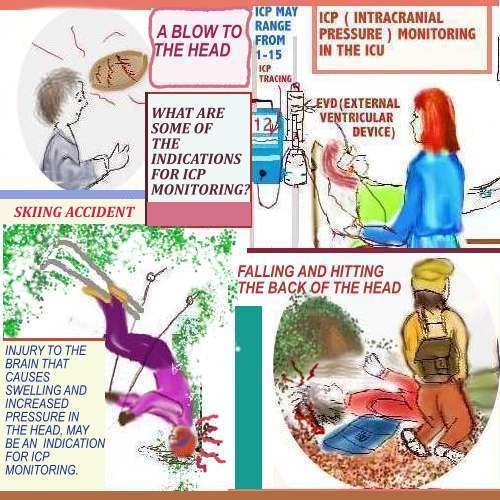
In the above image, examples of how brain injuries
can occur, are shown. Click on the links:
ICP monitoring
can occur, are shown. Click on the links:
ICP monitoring
for more information.
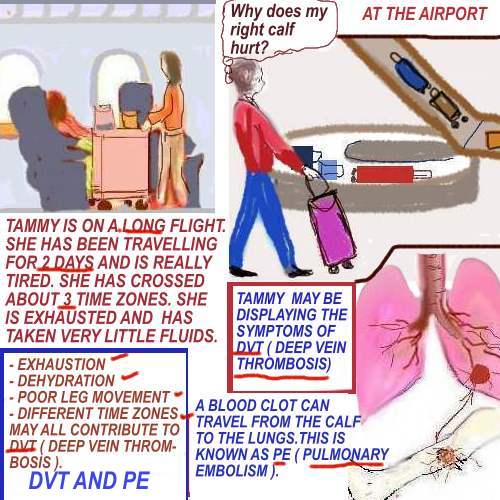
In the above image, examples of how brain injuries
can occur, are shown. Click on the links:
ICP monitoring
can occur, are shown. Click on the links:
ICP monitoring
for more information.

Learn more by clicking on the link:
IV assessment
IV assessment

Learn more about : Sepsis
The surgical patient is at risk for infection, related to
surgical intervention.
surgical intervention.
- Paralytic ileus may occur .
- Hypothermia due to fluid loss and bodily exposure
during surgery. Hypothermia increases the body's need
for oxygen and possibly may lead to a cardiac event.
during surgery. Hypothermia increases the body's need
for oxygen and possibly may lead to a cardiac event.
Warming measures are necessary.

posted by Margaret at
9:19 PM


0 Comments:
Post a Comment
<< Home