Dear Nurses

Tuesday, February 24, 2009

ASSESSMENT FROM HEAD TO TOE ( PART 3)

Updated 7/26      Dearnurses.com is no longer available.

Dear nurses,
New links and topics have been added below.


Learn more about: DKA ( The Clinical Setting- Part 1)


In the image above, a patient is in possible sepsis.
There is abdominal tenderness and redness at the
wound site. High fever and increased respirations
are also noted on assessment. The doctor's orders
include lab values
( WBCs, ABG, electrolytes and PT/ PTT ).
Learn more about : Sepsis


What is Multiple Sclerosis?
Multiple Sclerosis is a very debilitating illness
which affects the Central Nervous System. It is
 considered to be an autoimmune and progresses
over a period of time.

What are some symptoms of Multiple Sclerosis?
- Arm and/or leg weakness
- Visual disturbances like diplopia (double vision)
- Ataxia (unsteady gait)
- Tremors
- Fatigue

See image above for treatment.
Enjoy the video: Multiple sclerosis


Learn more about : Anticoagulation Therapy and
Enjoy the video: Anticoagulation therapy

Learn more about : Nursing communication

Common causes of medication errors


Like the artist perfects painting skills, so does the
nurse perfect clinical skills!


Friday, February 13, 2009

HAPPY VALENTINE'S DAY NURSES

Updated 12/25
Dear nurses,

I just wanted to wish you all a Happy Valentine's Day. 
God bless you all.


Learn more about the topics listed above : Sessions 36 and Dysphagia

Scenario: Pam has been admitted to the hospital
with complaints of abdominal pain over a period
of time. The doctor has decided to do an ERCP
( Endoscopic Retrograde Cholangiopancreatography)
for this questionable abdominal pain.

This will be reflected in the care plan.

Family teaching is also necessary


An intravenous infusion may be started in a peripheral
site or a central line site.

Learn more by clicking on the link:
IV assessment


Learn more about : Sepsis


The surgical patient is at risk for infection, related to
  surgical intervention.
Paralytic ileus may occur .
- Hypothermia due to fluid loss and bodily exposure
  during surgery. Hypothermia increases the body's need
  for oxygen and possibly may lead to a cardiac event.
 Warming measures are necessary.


Learn more about : The spread of infection

Saturday, February 07, 2009

PATIENT ASSESSMENT IN THE CLINICAL SETTING


Dear nurses,

The importance of good clinical assessment is not a guessing game.
For this reason, Assessment from Head to Toe, Part 2 has been
prepared to improve your knowledge base.
Learning how to assess and treat the patient problem is a must.
Chest and abdominal assessment are discussed in Part 2.

Enjoy learning! Watch these videos also, Sessions 2, 4, 11, 12, 13 & 19
http://www.dearnurses.com/clinical_nursing_videos_called_sessions

ASSESSMENT FROM HEAD TO TOE


     Assessment from Head to Toe, Part 2 is no longer available.


Updated 1/25

Dear nurses,

New links have been added. Please see below:

- Pneumothorax and Quiz questions
- Postoperative pneumonia
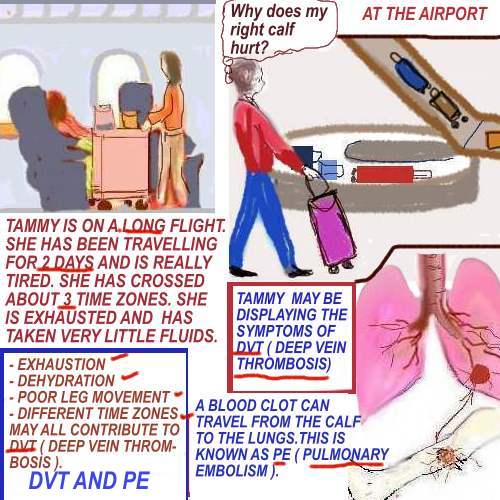
- DVT


Scenario 1: Lynn is a new RN. Her preceptor did not
do a good job explaining the correct way to do an 
assessment
Learn more , by clicking on the link: Assessment


Learn more about : Anticoagulation Therapy and
Enjoy the video: Anticoagulation therapy

Learn more about: The Circulatory System


Learn more about : Organizational skills


Learn more about: Sepsis


Wednesday, February 04, 2009

NURSING CAN BE NICE

Updated 5/25Dear nurses,

 Have you ever thought about ways to make the workplace
less stressful and enjoyable? Here are some helpful hints:

- If you have a light assignment and your coworker has a
   heavy one, why not offer some help.
- If you had a break and your coworker did not, why not
  offer to relieve your coworker.
Or, why not offer your coworker a cold drink or snack.
- If there is an unexpected emergency like a Code Blue,
  ask if there is anything you can help with.
Enjoy learning more about: Critical Thinking