POSSIBLE RISKS OF THE PATIENT CONFINED TO BED

Dear nurses,
Are you aware of the setbacks that may result from
the patient who is confined to bed for a prolonged
period of time?
Here are some of the problems that may result:
- Decubitus ulcers may develop and can be avoided.
Repositioning, good body alignment and soft
booties are ways to prevent this. The Braden scale
is used for predicting pressure sores.
- DVT ( Deep vein thrombosis) can be avoided by
encouraging leg exercises, using TED hose or the
SCD device on the patient confined to bed.
WHY TPN?
TPN ( Total Parenteral Nutrition) may be necessary
to provide adequate nutrition for the patient who is
unable to have foods orally.
Please click on the link below and watch the video
for more information:
New Nurse- Integumentary

Nursing profession. It provides guidelines within a
framework of practices.

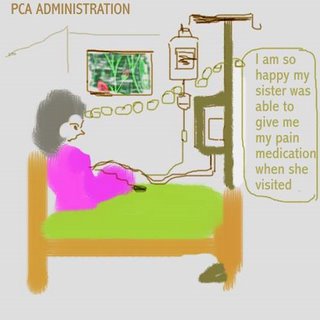
the doctor for the patient who is awake, alert and
able to self medicate. This method of administering
pain medication , is done via a pump, through the
intravenous route. Dosages are decided by the doctor.
included in the care plan. It is not uncommon for
family members to press the pain button for the
patient. Sessions 12 gives an overview of pain
assessment.

assessing pain. It is based on a scale of 0-10.
the highest point, so does pain start from 0-10.
medication has been given. See image for more
information.

posted by Margaret at
10:09 AM
|
0 comments


