ENJOY LEARNING ABOUT EKG READING AND CHEST PAIN
The patient having chest pain, would have
scales assessment ( 1-10) is usually done.
necessary.
Here are some diagnostic tests that are done frequently.
Follow the links below:
1. Chest X ray
2. CAT scan
3. EKG
4. MRI scan
5. Ultrasound
6. Echocardiogram
Scenario: The patient above, had surgery three days ago.
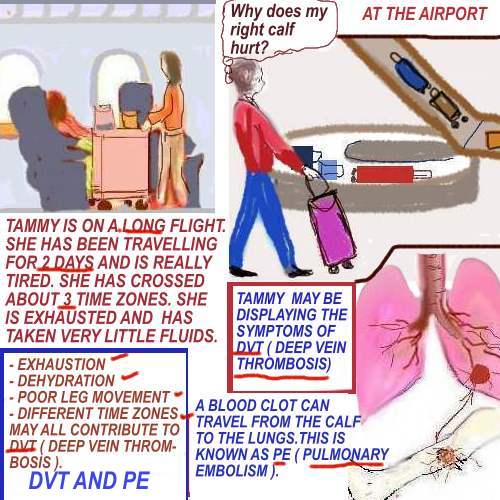
He is on anticoagulation therapy (Heparin) for DVT.
Anticoagulants are blood thinners. Their purpose is to
prevent blood from clotting too easily.
Patients with atrial fibrillation may be placed on
anticoagulation therapy.
This topic continues : Here
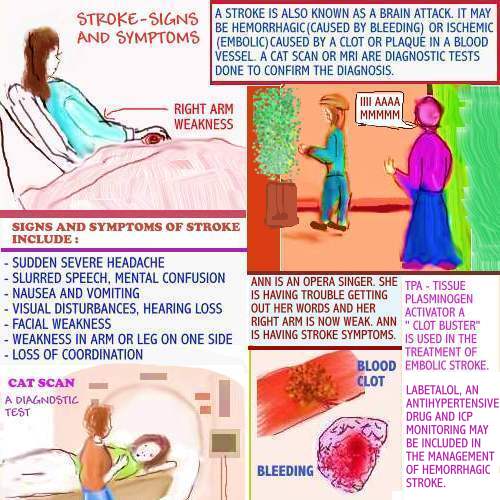
Scenario: In the image above, Ann is an opera
singer. While on stage, she suddenly starts having
trouble getting her words out. Her right arm also
feels weak. These symptoms are classic of someone
experiencing a stroke. This topic continues : Here

Scenario: In the image above, Ann is an opera
singer. While on stage, she suddenly starts having
trouble getting her words out. Her right arm also
feels weak. These symptoms are classic of someone
experiencing a stroke.
Dearnurses.com is no longer available. Here are some diagnostic tests that are done frequently.
Follow the links below:
1. Chest X ray
2. CAT scan
3. EKG
4. MRI scan
5. Ultrasound
6. Echocardiogram

Scenario: The patient above, had surgery three days ago.
He is on anticoagulation therapy (Heparin) for DVT.
Anticoagulants are blood thinners. Their purpose is to
prevent blood from clotting too easily.
Patients with atrial fibrillation may be placed on
anticoagulation therapy.
This topic continues : Here

Poor circulation may occur for a number of reasons.
The patient in heart failure, is at risk for stroke.
Myocardial infarction
A MI (myocardial infarction ) is also known as a heart
attack. It results from obstruction to blood flow. Fatty
deposits may cause this.
Death of the heart muscle surrounding the obstructed
blood vessel will result. Symptoms such as lack of oxygen,
shortness of breath and chest pain will occur.

Updated 5/26

Clinical scenarios are a normal part of nursing.
Here are some diagnostic tests that are done frequently.
Follow the links below:
1. Chest X ray
2. CAT scan
3. EKG
4. MRI scan
5. Ultrasound
6. Echocardiogram
In the image above, a patient is having
Hypovolemic Shock is a life threatening emergency.The New Nurse- Blood transfusion
What is Multiple Sclerosis?
Multiple Sclerosis is a very debilitating illness
which affects the Central Nervous System. It is
considered to be an autoimmune disease and
progresses over a period of time.