Dear Nurses

Tuesday, November 22, 2016

WISHING THE BEST HOLIDAY SEASON FOR ALL NURSES

Dear nurses,

I would like to wish you all the best for
the holiday season. Please enjoy watching
Sessions 61:
From Holiday Cheer to Holiday Horrors.

Saturday, November 12, 2016

WHY IS ICP MONITORING DONE?

Updated 6/26

Dear nurses,

Hope you had a good week. I would like
to share with you helpful information
about ICP Monitoring. New information
and links have been added below.
Enjoy watching  the video:
The New Nurse - ICP Monitoring


A skiing accident and admission to ICU

In the image above, a skiing accident has occurred.
The injured person  is admitted to the ICU. ICP
monitoring has been set up. Family members have
arrived and cannot make sense of what is happening.

The staff members have not taken the time to explain
what has taken place.

When taking care of a patient who has experienced 
a traumatic event, the nurse should explain to the
family, what is being done. It may become necessary,
to get help from other staff members to help with 
communication.
Helpful suggestion:

Patient and family education should always
be included in the plan of care. The nurse is
responsible for initiating and updating the
care plan. 


Wednesday, November 02, 2016

MEDICAL TERMINOLOGY IN THE CLINICAL SETTING - PART 1

Dear nurses,

Hope your week is going well. I wanted to
share with you a new video Sessions 62-
Medical terminology in the Clinical Setting.
 Topics include:
- DKA ( Diabetic Ketoacidosis )
- Hypothermia in the postoperative patient
- Malignant Hyperthermia its causes and treatment
So, just click on the link:
Medical terminology in the Clinical setting
and enjoy learning!


Learn more about : PACU

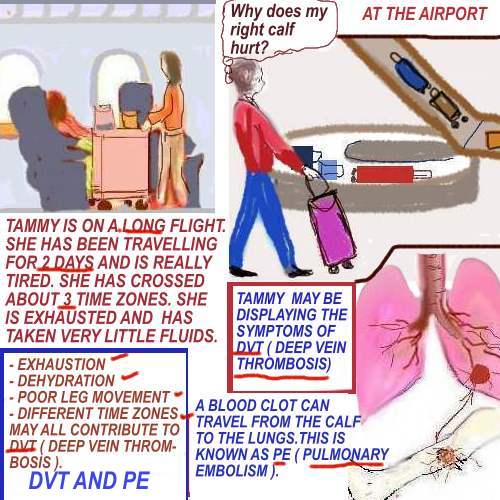
Most people who anticipate taking a long plane
 flight, may hardly stop to think about dehydration
 and its consequences. 
Learn more about : ARDS, DVT and PE


Learn more about : The Endocrine System


The standards of care are an essential part of  the
Nursing profession. It provides guidelines within a
framework of practices.
Learn more about : The standards of care

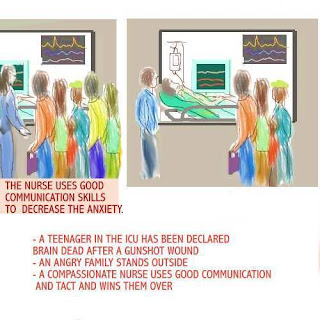
Learn more about : Nursing communication


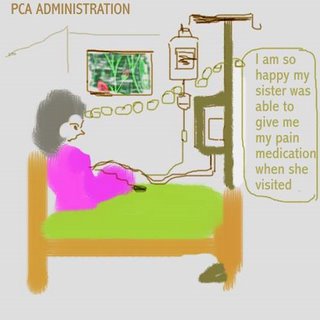
PCA ( Patient Controlled Analgesia)

Patient Controlled Analgesia may be ordered by
the doctor for the patient who is awake, alert and
able to self medicate. This method of administering
pain medication , is done via a pump, through the
intravenous route. Dosages are decided by the doctor.

However, patient and family teaching should be
included in the care plan. It is not uncommon for
family members to press the pain button for the
patient. Sessions 12 gives an overview of pain
assessment.

Indications for the use of the PCA pump include:
- patients who have surgical intervention
- patients with cancer or chronic pain issues
- conditions such as pancreatitis, sickle cell 
  anemia and more.


The Numerical Pain Scale is a useful tool when
assessing pain. It is based on a scale of 0-10.
A ladder starts from the ground and escalates to|
the highest point, so does pain start from 0-10.

It is important to do a pain assessment after pain
medication has been given. See image for more
information.