Dear Nurses

Saturday, March 29, 2008

CRANIAL NERVES IN REVIEW


Updated 5/24
Dear nurses,

Stroke Series Assessment is no longer available. 

The largest of the cranial nerves, is the Trigeminal.
                 This nerve contains three branches:
                Opthalmic ( corneal blink reflex). 
                           Maxillary - which supplies the upper jaw
                   Mandibular - controls the lower jaw.
Learn more :Cranial nerves
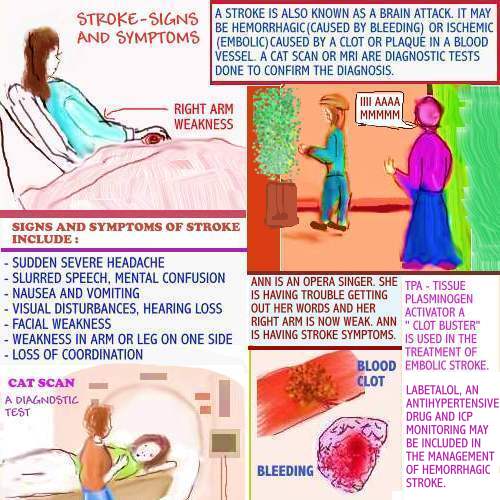


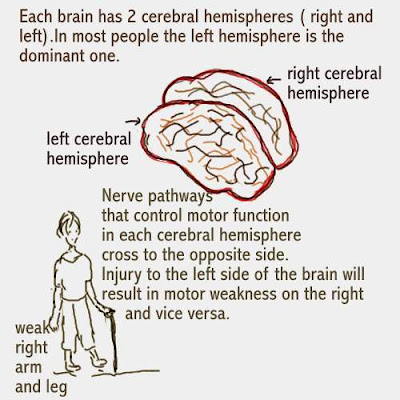
In the image above, Ann is an opera singer.
While on stage, she suddenly starts having
trouble getting her words out. Her right arm
also feels weak. These symptoms are classic
of stroke symptoms.

Severe headache, mental confusion, visual
disturbances and right or left sided weakness
ma occur.


      Learn more: The care plan
For more helpful information, please click on the links below:

CEREBRAL FUNCTION IN REVIEW


The human brain is made of 2 cerebral hemispheres,
right and left. The corpus callosum forms a bridge that
joins them together. Each hemisphere has four lobes
( frontal, parietal, temporal and occipital).

Millions of nerve cells called neurons originate in the
brain and transmit information all over the body. The
nerve pathways in the brain cross over. This results in
the left brain controlling the functions of the right and
vice versa.


Learn more about : Subarachnoid Hemorrhage


Learn more about : Aneurysms

Friday, March 21, 2008

HAPPY EASTER TO ALL NURSES


Updated 9/25

Dear nurses,

New topics have been added, for your learning
pleasure.

Hemodynamics refers to blood flow. The heart is a pump,
which pumps blood around the body. If there is damage, 
like a myocardial infarction, the heart's function will be 
impaired. 
Learn more about: Congestive heart failure


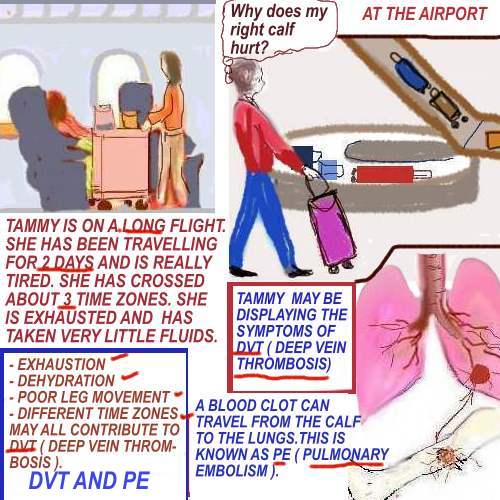
Learn more about : ARDS, DVT and PE

RECOGNIZING NURSING LANDMARKS AND FLORENCE NIGHTINGALE

Updated 9/25


Dear nurses,

Advancements in Nursing has taken many twists and
turns.The iron lung machine was once used for mechanical
ventilation. Today however, it has been replaced by ventilators
that can make a patient's life a lot easier.

Let us not forget to give the credit to Florence Nightingale, the
one who started with simple things such as love, caring and compassion.

We have now come a long way from the simplicity that
started this noble profession, but those words can still be
valuable to us all. 

So, let us try to remember to try to love and care for our
patients, family and coworkers. I truly appreciate all that
I have learnt over the years, from bad situations to good
ones.

These have all come together to make a great contribution
for teaching. Learn more about: DKA


Clinical scenarios are a normal part of nursing.
Above there are five clinical scenarios unfolding.

Scenario 1- A patient who is admitted to a healthcare
facility and will need teaching. Click on the link:

Scenario 2- The patient on mechanical ventilation
and the nurse is unsure what to do.Click on the link:

Scenario 3 -A patient has arrived in the Emergency
Room, both the doctor and nurse are at the bedside
to do an assessment. Learn more by clicking on the link:
Scenario 4 - A nurse does an assessment. Click on the links:

Scenario 5 - A nurse tries to encourage a patient to
do breathing exercises. Click on the link:


Hemodynamics refers to blood flow. The heart is a pump,
which pumps blood around the body. If there is damage, 
like a myocardial infarction, the heart's function will be 
impaired. 


Saturday, March 15, 2008

THE CLINICAL SETTING STEP BY STEP

Updated 12/24

Dear nurses,
The Clinical Setting Step by Step is no longer available.
New information is provided below.

Regardless of where a nurse works, doing good communication
skills, assessment tools and sound clinical judgment are all part
of a days work. Learn more: Here


The nurse above is about to make a medication error.
This is very poor judgement on her part.
Here are some helpful pointers for good medication administration:
- Follow MD orders
- Remember the five or more rights
- DO NOT USE COLOR CODING AS YOUR ONLY GUIDELINE.
Remember, many pills may have the same color, but that does not
mean they are of equal strength.
- If you are a new nurse and you are uncertain, consult with a more
 experienced nurse to help you out.
- Always follow your Institution's policies and procedures


Learn more about: Communication skills


ANEURYSMS IN REVIEW


Updated 2/25

An aneurysm is a bulge or balloon in a blood vessel.
The majority of aneurysms occur in the abdominal 
area.They may also occur along the blood vessels
that divide, after leaving the abdominal area.
An example of this phenomenon is the iliac artery.

Learn more about: Abdominal Aortic Aneurysm


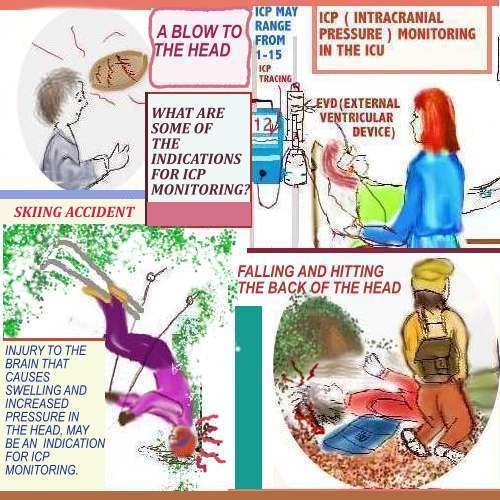
In the above image, examples of how brain injuries
can occur, are shown. Click on the links:
ICP monitoring
for more information.


Learn about : the ABG and Code Blue

Learn more about : The Circulatory System


PARALYTIC ILEUS IN REVIEW.


Updated 2 /26

Scenario: In the image above, Alice had abdominal
surgery 3 days ago. She has no audible bowel sounds
and is complaining of severe abdominal pain.

What is Paralytic Ileus?

A paralytic ileus is a postoperative complication.
It may occur in any surgical patient and is caused
by anesthetics.

What are some of the symptoms of this condition?
Absent bowel sounds, abdominal pain and distention.

Please watch the video: Bowel obstruction


Scenario: Emma is in the doctor's office with complaints 
of abdominal pain, diarrhea and flatulence.The nurse takes
history and does an assessment.

What is IBS? 

Irritable Bowel Syndrome is a digestive disorder
that is diagnosed based on symptoms. It disrupts 
the normal pattern of the digestive system and is
sometimes brought on by stress related situations.

ABDOMINAL ASSESSMENT
 This is done by:
- inspection
- auscultation
- percussion and palpation

Preparation for ERCP (Cholangiopancreatography)

Learn more: What is an ERCP?


Scenario: Pam has been admitted to the hospital
with complaints of abdominal pain over a period
of time. The doctor has decided to do an ERCP
( Endoscopic Retrograde Cholangiopancreatography)
for this questionable abdominal pain.

This will be reflected in the care plan.


LIVER FAILURE IN REVIEW


Scenario: In the image above, Mr.O is in liver failure.
Past history includes 20 years of alcohol ingestion. His
liver is enlarged and his abdomen is grossly distended.

He is also lethargic and has pedal edema.
Learn more by clicking on the link:
Liver and renal failure

Learn more about Liver and kidney failure

Saturday, March 08, 2008

ADDRESSING ASYSTOLE AND OTHER LETHAL HEART RHYTHMS

Updated 7/25


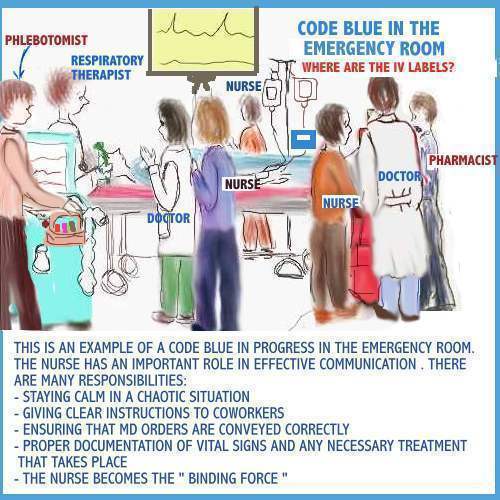
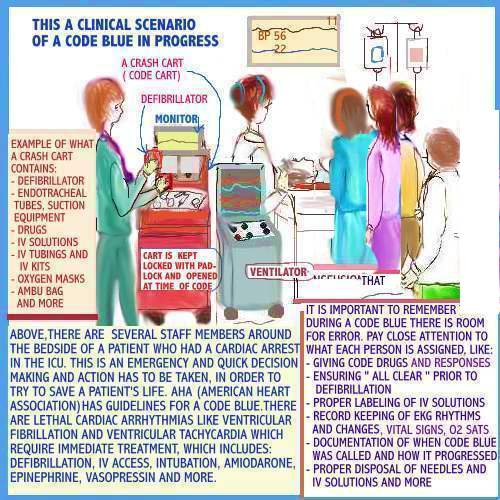
The image above shows a Code blue in progress. This is 
happening in the emergency Room. Always follow your
Institution's policies and procedures for Code Blue. 

What is the role of the nurse who is assigned to the Code Blue?

The nurse has an important role in effective communication.
There are many responsibilities.
- staying calm in a chaotic situation
- giving clear instructions to coworkers
- ensuring that MD orders are conveyed correctly
- proper documentation of vital signs and all treatments /
  interventions that take place ( defibrillation for example)
  - the nurse becomes the " binding force.


Addressing lethal EKG rhythms

There are some EKG rhythms that are considered to be lethal.
Instant intervention is necessary for good outcomes. Here are
the most lethal rhythms:

Asystole - sometimes referred to as " flat-line. The electrical
heart's conduction system is not functioning. There are no
ventricular contractions. The patient is pulseless and
unresponsive. immediate action has to be taken. 

Ventricular Tachycardia - There may or may not be a pulse
present. The ventricles are beating rapidly and there is no atrial
activity. Blood flow to the vital organs is compromised.

Ventricular Fibrillation -  There is a chaotic rhythm and no
atrial activity. The ventricles are quivering , so there is no 
cardiac output. There is no pulse and the patient may become
unresponsive. Immediate action to defibrillate is usually done.

***American Heart Association has protocols in place for each 
EKG rhythm.

The postoperative patient is at risk for hypothermia.
Fluid loss and exposure in the surgical suite, may predispose
 to hypothermia. A lethal cardiac arrhythmia may result.

 Hypothermia increases the body's demand for oxygen
 and if left untreated can lead to a myocardial infarction
 (heart attack). Trauma resulting in excessive blood loss, 
 as well as alcohol ingestion, may also lead to hypothermia.

ADDRESSING PEA (Pulseless Electrical Activity)

Updated 7/25


 PEA is a cardiac arrhythmia that requires immediate treatment.
 ACLS guidelines are followed to treat this condition. Typically,
 patients have electrical conduction from the heart, but the clinical
 picture, is a patient who does not respond and needs CPR.

Causes of PEA include:
- Trauma, hypothermia
- Hypvolemia ( A common cause)
- Severe dehydration
- Electrolyte imbalances
- Pulmonary embolism
- Drug overdose
- Heart attack , cardiac tamponade and more

Treatment is directed at correcting the cause of the problem.
Drugs such as Epinephrine and Atropine are included in the 
treatment. ACLS protocols are followed.


Learn more about: Cardiopulmonary Arrest

CORRECT ASSESSMENT OF CHEST PAIN IN THE CLINICAL SETTING

The consequences of ignoring chest pain in the clinical setting may be fatal. Chest pain should never be ignored. Below, the result of the above nurse's decision is addressed.
For more information on assessing chest pain visit:
http://www.dearnurses.com/chest_pain_series_-_master_your_clinical
and
http://www.dearnurses.net/the_clinical_setting_step_by_step

WHAT IS WRONG WITH THIS EKG-VENTRICULAR FIBRILLATION

Updated 4/26

Ventricular Fibrillation -  There is a chaotic rhythm and no
atrial activity. The ventricles are quivering , so there is no 
cardiac output. There is no pulse and the patient may become
unresponsive. Immediate action to defibrillate, is usually done.

Learn more about: Code Blue and CPR


Hemodynamics refers to blood flow. The heart is a pump,
which pumps blood around the body. If there is damage, 
like a myocardial infarction, the heart's function will be 
impaired. 
Learn more about: Congestive heart failure

Common causes of medication errors


Like the artist perfects painting skills, so does the
nurse perfect clinical skills!

WHAT IS WRONG WITH EKG-TREATMENT OF VENTRICULAR FIBRILLATION

Updated 1/25
Dear nurses,
Dearnurses.com is no longer available.
  
Ventricular Fibrillation is a lethal rhythm.
Its hallmark is no pulse, no heart contractions
and a chaotic EKG rhythm,which is demonstrated
above.

There is also no atrial activity. The ventricles are
quivering , so there is no cardiac output. The patient
may become unresponsive. Immediate action to
defibrillate is usually done.

***American Heart Association has protocols in
place for each EKG rhythm.

Causes and Treatment of Ventricular Fibrillation
are outlined above.

For more information, please click on the links below:


The image above shows a Code blue in progress. This is 
happening in the emergency Room. Always follow your
Institution's policies and procedures for Code Blue. 

What is the role of the nurse who is assigned to the Code Blue?

The nurse has an important role in effective communication.
There are many responsibilities.
- staying calm in a chaotic situation
- giving clear instructions to coworkers
- ensuring that MD orders are conveyed correctly
- proper documentation of vital signs and all treatments /
  interventions that take place ( defibrillation for example)
  - the nurse becomes the " binding force.


CORRECT CHEST PAIN ASSESSMENT


Chest pain ( Sessions 12) should never be ignored, no matter how simple. Assessment, documentation and intervention if necessary, should be done. These simple steps above
may be life-saving.
Enjoy reading Chest Pain Series for more information on this topic and
Myocardial Infarction(Chapter 1).

Saturday, March 01, 2008

HAVE A GOOD WEEK AND ENJOY LEARNING

Updated 7/25

Dear nurses,

There is no need to feel like you are drowning.
Below are new topics and links for learning.


Here are some diagnostic tests that are done frequently.
Follow the links below:
1. Chest X ray
2. CAT scan
3. EKG
4. MRI scan
5. Ultrasound
6. Echocardiogram

Learn more about : IV site care and assessment

   Learn more : The Nursing Process

WHAT IS WRONG WITH THIS EKG SERIES - TORSADES DE POINTES


Updated 4/26

Dear nurses,

Hope you had a good week. I have tried to simplify
Torsades de Pointes, which is a form of Ventricular 
Tachycardia.

 It is commonly found in patients who are chronic
alcoholics and are poorly nourished. Lack of Magnesium
is usually the cause. Treatment is directed at correcting 
the cause.

Clinical appearance of the patient in DKA


Scenario: Tom was admitted to the ICU, with the clinical
picture of a patient in diabetic ketoacidosis (DKA). His blood
glucose was 600. Tom has an altered level of consciousness (LOC).
He also has hyperglycemia (elevated blood glucose).
Please watch the video below:
Dehydration

Signs and symptoms of DKA
The patient in DKA requires immediate intervention and a level
 of care like ICU.

Paracentesis

In the image above , a patient is being examined by
his doctor. He has an enlarged abdomen due to liver 
failure. He is also experiencing shortness of breath.

The patient in liver failure, may experience difficulty
breathing. This is caused by an accumulation of peritoneal
fluid in the abdominal cavity.

Paracentesis is done to remove excess fluid and make 
breathing easier.

The Care Plan would reflect the potential problems
associated with this condition. This would include:
- Respiratory problems related to ascites.
Skin breakdown related to anasarca.
- Mental confusion related to liver toxins.
-Decrease in urinary output related to liver failure.


Learn more about : Potential problems and 
 Care planning and The Digestive System