Dear Nurses

Friday, March 30, 2007

STAY TUNED


UPDATE:-For helpful information on EKG interpretation, simply click on the links:
and enjoy reading.

WHAT IF YOU HAD TO REPLACE ELECTROLYTES


ELECTROLYTE REPLACEMENT IS NOT A GUESSING GAME .IMPROPER ADMINISTRATION MAY BE FATAL .
FOR HELPFUL CLINICAL INFORMATION, PLEASE CLICK ON THE LINK:
also enjoy watching the Sessions 24 Clinical videos for nurses.

ELECTROLYTE REPLACEMENT


Elderly people are more prone to dehydration. 
This m
range from mild to severe, depending on the situation.Some elderly people live alone and may tend to neglect
taking 
adequate fluids. Fluid and electrolyte replacement
are beneficial when combating dehydration.
Electrolytes are basically minerals in the blood
and body tissues that give 
the 
electrical charge 
necessary to keep the heart, kidneys and vital organs
functioning well.
Dehydration in a dry climate like the desert, may go
unnoticed for many hours. In humid weather, sweating
is obvious. This however, is not the case in a climate
with low humidity, like the desert.

Loss of body fluids through sweating can be ignored
until symptoms such as severe headache, muscle
weakness and fatigue set in. This can cause dehydration.

What is the treatment of electrolyte imbalances?
The treatment will depend on the cause. 
Learn more by watching the video:


Saturday, March 24, 2007

WHAT IF YOUR PATIENT IS HAVING A STROKE?

Updated 2/26
Learn more about: Cardioversion


Heparin is an anticoagulant drug. It is used
to prevent the formation of blood clots. It is
important to know what to look for, if the
patient  in your care is on anticoagulation
therapy. Learn more:


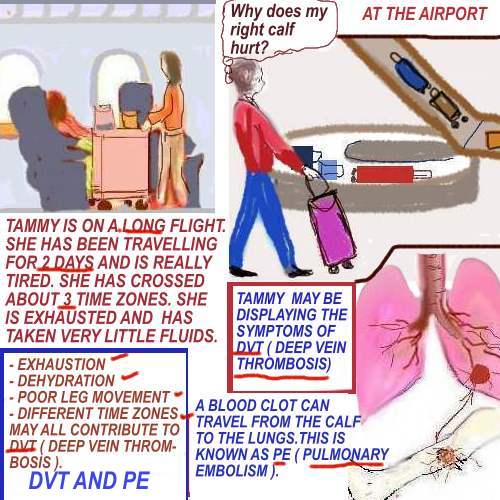
    Learn more about : ARDS, DVT and PE


Here are some diagnostic tests that are done frequently.

Follow the links below:

1. Chest X ray
2. CAT scan
3. EKG
4. MRI scan
5. Ultrasound
6. Echocardiogram


WHAT IF YOUR PATIENT IS HAVING A STROKE?


Updated 2/26
Dearnurses.net is no longer available.
New information has been added below.


    Atrial fibrillation is a rapid , irregular arrhythmia.
    It is caused by the atria ( upper heart chambers)
    beating rapidly and out of character. There is no P
    wave on the EKG. This topic continues : Here

Scenario: The patient above, had surgery three days ago.
He is on anticoagulation therapy (Heparin) for DVT. 
Anticoagulants are blood thinners. Their purpose is to
 prevent blood from clotting too easily. 

 Patients with atrial fibrillation may be placed on
 anticoagulation therapy.

This topic continues : Here

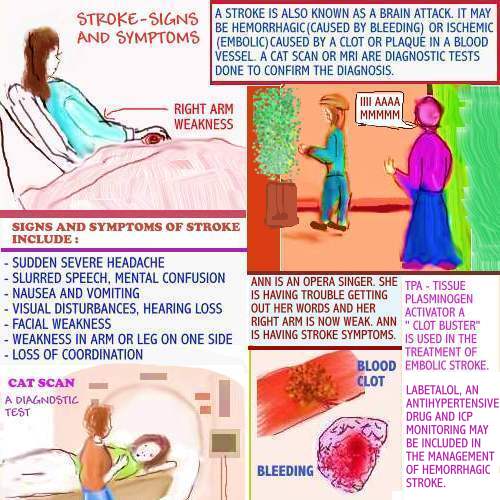
Scenario: In the image above, Ann is an opera
singer. While on stage, she suddenly starts having
trouble getting her words out. Her right arm also
feels weak. These symptoms are classic of someone
experiencing a stroke. This topic continues : Here

WHAT IF A CLOT TRAVELS TO THE BRAIN


FOR MORE UPDATED AND HELPFUL INFORMATION
ON STROKE, CLICK ON THE LINK:
Also enjoy watching the Clinical videos for nurses.

WHAT AM I SUPPOSED TO DO ?


If you have difficulty understanding how to read an EKG. New information is 
available. EKG SERIES is no longer available.


UNDERSTANDING EKG WAVES

Dearnurses.com is no longer available.  

Updated 5/24
Dear Nurses,

Learning to read an EKG can be easier than you think.
You do  not have to be intimidated by those waves!
Also, learn more about Atrial fibrillation.


Here are some diagnostic tests that are done frequently.

Follow the links below:

1. Chest X ray
2. CAT scan
3. EKG
4. MRI scan
5. Ultrasound
6. Echocardiogram


ATRIAL FIBRILLATION / ATRIAL FLUTTER


Atrial fibrillation is a rapid , irregular arrhythmia.
 It is caused by the atria (upper heart chambers)
beating rapidly and out of character. There is no P
 wave on the EKG. This topic continues : Here

Scenario: The patient above, had surgery three days ago.
He is on anticoagulation therapy (Heparin) for DVT. 
Anticoagulants are blood thinners. Their purpose is to
 prevent blood from clotting too easily. 

 Patients with atrial fibrillation may be placed on
 anticoagulation therapy.

This topic continues : Here


WHAT IF YOUR PATIENT IS IN ATRIAL FIB ?


 Dearnurses.com is no longer available.

Updated 2 /26

Cardioversion is a form of shock treatment sometimes
 used for Atrial Fibrillation. It is used to change the heart
 rhythm from Atrial fibrillation to a normal rhythm( sinus rhythm). 
The shock is done on the R wave of the EKG. Typically, it is not
an emergency.

Defibrillation is a form of shock treatment used for
Ventricular fibrillation.This is a life threatening rhythm 
and the shock is done as an emergency.There is usually 
no pulse and the patient is unresponsive.

To learn more about this topic, simply click on the links below:


 Heart and lungs work together.


Scenario : In the image a waitress is busy at work. 
She suddenly develops stroke symptoms. 

What is a stroke?
stroke is also known as a brain attack. It may be hemorrhagic
( caused by bleeding) or ischemic ( embolic), caused by a clot 
or plaque.

Can a stroke be prevented?
It is suggested that a stroke can be prevented. People who
smoke frequently, eat a diet rich in cholesterol foods and
do not exercise regularly, are considered to be at risk.

High blood pressure and obesity also puts someone at risk.
Lifestyle changes such as regular exercise, eating a diet with
fresh fruits and vegetables, as well as high fiber may help to
reduce stroke risk.


WHAT IF YOUR PATIENT HAS CHEST PAIN ?

Updated 2/26

Dear nurses,
New topics and links have been added below.


Chest pain may be the warning sign of a heart attack!


Learn more about : Chest pain assessment

Learn more about: The Circulatory System


Poor circulation may occur for a number of reasons.
The patient in heart failure, is at risk for stroke.

Myocardial infarction

A MI (myocardial infarction ) is also known as a heart
attack. It results from obstruction to blood flow. Fatty
deposits may cause this. 

Death of the heart muscle surrounding the obstructed
blood vessel will result. Symptoms such as lack of oxygen,
shortness of breath and chest pain will occur.

Diabetic Retinopathy
 This condition affects the blood vessels in the eye.
 Poor vision and possible blindness may result from
 leaking and weakening of the blood vessels.


The consequences of poor circulation

The patient who has heart failure,
is also at risk for stroke or renal failure.
The diabetic patient is also at risk for stroke.


THE WHAT IF SERIES ( CHEST PAIN )


Dear nurses,
Did you know that chest pain may be a symptom of a cardiac event.
It may be stabbing, it may be sharp, squeezing, it may radiate to the
jaws and shoulders.
Learn more about chest pain assessment:
http://www.dearnurses.com/clinical_nursing_videos_called_sessions
and
http://www.dearnurses.com/chest_pain_series_-_master_your_clinical

Friday, March 16, 2007

EKG WAVES


For more helpful and updated information on EKG INTERPRETATION , click on the link: http://www.dearnurses.com/ and enjoy "EKG SERIES- WHAT IS WRONG WITH THIS EKG"

UNDERSTANDING EKG READING


Dear Nurses,
Did  you know these simple facts about heart. It is a pump which
pumps blood all around the body. The heart has 4 chambers.
There are 2 upper and 2 lower.

It has an electrical system which works to stimulate contraction
of its chambers. The EKG reflects normal or abnormal function
of the electrical system

FOR MORE INORMATION ON EKG READING,
PLEASE CLICK ON THE LINK:
http://www.dearnurses.com/ekg_series_-_what_is_wrong_with_this_ekg.

THE" WHAT IF "SERIES


Updated 6/24
Dear nurses,

The " What if series" is no longer available. this has been replaced with:


WHAT IF YOUR PATIENT IS ON A HEPARIN DRIP


Dear Nurses 
Updated 4/24
More updated information on this topic , can be accessed
by clicking on the links: 


A patient on a blood thinner such as Heparin may have
bleeding from the gums, from the dressing site, in the
urine and more.

      Learn more: IV site care

Sunday, March 11, 2007

ALLERGIC REACTION (BLOOD TRANSFUSION)


An allergic reaction is usually unpredictable. An allergic reaction 
( Sessions 11 ) should always be a consideration , even when MD orders, cross-matching
and institution's policies have been done correctly. To learn more about allergic reaction
to blood, simply click on the link:

Saturday, March 03, 2007

UNDERSTANDING THE VENTRICULAR SYSTEM

 Updated 9/25
   
                                   Ventricular System

The ventricular system inside the brain,
is a free-flowing system. Cerebrospinal
fluid acts as a buffer and carries nutrients.
Any obstruction to the flow of CSF
will cause a rise in ICP ( Intracranial pressure).


There are three protective coverings under the cranium:
the dura mater, arachnoid mater and pia mater.

Beneath the arachnoid mater is a space known as the
Subarachnoid space.There are also hollow spaces 
inside the brain, called ventricles. 

CSF ( cerebrospinal fluid)is produced in these hollow
spaces ( 4 total). CSF is clear and acts as a buffer to
prevent injury. It flows without obstruction.

Please click on the link below: ICP Monitoring and
and enjoy learning.

Here are some brain teasers:

Q -What is the normal distance for testing visual acuity?
A- 14-20 feet away.

Q - What does stereognosis mean?
A- The ability to identify objects by touching.

Q - What part of the brain is responsible for blance
and coordination?
A- The cerebellum, which lies below the cerebrum.

I AM A NEW NURSE READY FOR NEW CHALLENGES


Updated 9 /25
Dear nurses,

Dearnurses.org/net is no longer available.
New links have been added, to improve
your learning curve.

Nursing is a noble profession. It should be
 a joy to care for a patient and see progress,
 because you were able to share your skills.

It is great to do a satisfactory job. I love my 
profession and I thank God for the ability
to do a good job for my patients.

Remember patients are in a helpless position
 because they are sick. They depend on the
 nurses for good care and support. 

 Learn more about - Communication skills


Clinical scenarios are a normal part of nursing.

Above there are five clinical scenarios unfolding.

Scenario 1- A patient who is admitted to a healthcare
facility and will need teaching. Click on the link:

Scenario 2- The patient on mechanical ventilation
and the nurse is unsure what to do.Click on the link:

Scenario 3 -A patient has arrived in the Emergency
Room, both the doctor and nurse are at the bedside
to do an assessment. Learn more by clicking on the link: