Dear Nurses

Tuesday, October 27, 2009

CLINICAL INFORMATION FOR NURSES

Dear nurses,
Just to let you know, there is plenty of Clinical Information
for Nurses on the following sites, just click on the links below:

www.dearnurses.com


www.dearnurse.net

enjoy learning.

CARE PLAN-WHAT IS IT?

Updated 5/25

Whether you are the nurse who works in the PACU,
surgical floor, ER, or Critical Care, it is important to
remember that your quality of nursing care will impact
patient outcomes. 
For more information on this topic, please click on the link:


CLINICAL SCENARIO:
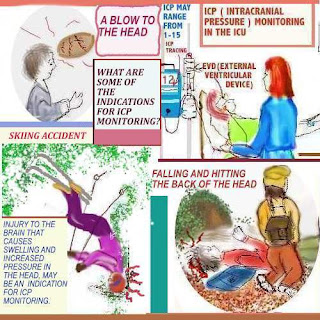
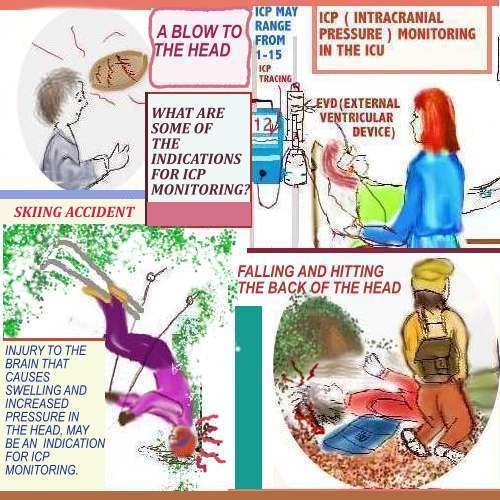
The patient in the above scenario had brain surgery.
ICP Monitoring is being done. Family members have
been around the bedside for several hours.
To learn more about this topic, please click on the link:


Thursday, October 22, 2009

NURSING DIAGNOSIS AND CARE PLANNING

Updated 6/25


Learn more about: Care Planning

HEY NURSE, DID YOU TAKE CARE OF THE CARE PLAN?

Dear nurses,

Do you understand how to implement the Plan of Care ?
Please learn more about this topic, by clicking on the link:
Sessions 26 (Nursing Diagnosis and Care Planning).

INFECTION CONTROL


Updated 12/24
Dear nurses,
Dearnurses.net is no longer available.

Above, there is a hospital orientation in progress. The nurse
educator, is advising the staff how to practice good hygiene
and prevent the spread of infection.


Learn more about : The spread of infection


An intravenous infusion may be started in a peripheral
site or a central line site.

Learn more by clicking on the link:
IV assessment


Learn more about : Sepsis


The surgical patient is at risk for infection, related to
  surgical intervention.
Paralytic ileus may occur .
- Hypothermia due to fluid loss and bodily exposure
  during surgery. Hypothermia increases the body's need
  for oxygen and possibly may lead to a cardiac event.
 Warming measures are necessary.


BRUDZINSKI'S AND KERNIG'S SIGNS

Updated 7/25

Kernig's and Brudzinski's signs may occur in the
patient who has Meningitis or a Subarachnoid Hemorrhage.
These signs may also occur with a Traumatic Brain Injury.


To learn more about these topics, simply click on the links: 


Learn more about: Subarachnoid hemorrhage


Dearnurses.com is no longer available.
Please click on the links below, to learn
more about:
Stroke and its prevention
and

Learn more aboutICP MONITORING for the layperson


PHYSICAL THERAPY IN THE CLINICAL SETTING

Dear nurses,

Many patients may require Physical Therapy/ Occupational
Therapy following an injury like a stroke, car accident,
amputation or surgical intervention.
To learn more about the purpose that Therapy serves in the
Clinical Setting, simply click on the link:
http://www.dearnurses.net/the_clinical_setting_step_by_step
( Chapter 20) and enjoy learning more.

Saturday, October 17, 2009

SIMPLIFYING MATERNAL NURSING


Updated 12/24              Dearnurses.net is no longer available.
Dear nurses,


Scenario: Megan is 12 weeks pregnant.
She has been vomiting once or twice
daily and is beginning to feel weak
and tired. Learn more by clicking on the link:

Estrogen and Progesterone are two hormones
produced by the ovaries initially, then the placenta 
in the latter part of pregnancy. 

They are first produced by the ovaries and later
the placenta. Estrogen and Progesterone also
keep the placenta healthy and enhance lactation.

IDENTIFYING FETAL DEVELOPMENT

Updated 1/26

Dear nurses,

Dearnurses.net is no longer available.

In the image above, a young woman is visiting her
doctor for her first prenatal checkup. A history and
physical is done by the nurse. Blood pressure, pulse
and heart rates are checked and recorded at each 
prenatal visit. Lab values are also done.

Significant information about her last menstrual
period, still births, any previous pregnancies or
abortions.

The first three weeks of pregnancy is known as
the pre-embryonic or zygote stage. The next
four- eight weeks are known as the embryonic 
stage.

Types of pelvis

There are four main types of pelvis. They
are demonstrated in the image above.

Fundal height

During the prenatal period, the pregnant
uterus grows as the fetus grows.The fundal
height is used to assess the growth of the
developing fetus. 

During each visit the fundal height will be
measured in centimeters. This is done, from
the top of the uterus to the top of the pubic bone.

Learn more about: Fetal Heart Monitoring

Dearnurses.org is no longer available.

Braxton Hicks contractions

These contractions are mild uterine contractions
that may start around the second trimester. They
become more frequent in the third trimester.

FALL BEAUTIFUL FALL


Dear nurses,
This fall scene is just for you. So, enjoy it and also reading the rest of my blog.

Sunday, October 11, 2009

DIPLOPIA, WHAT IS IT?


Updated 8/24

Dear nurses,

Dearnurses.com is no longer available.

The above scenario:  Mary was finished pumping gas. She begins
walking to the service center to pay and notices everything is double.
She is experiencing a condition called diplopia.

Diplopia or double vision, may be classified as temporary, monocular
binocular, or voluntary.

Causes of diplopia :
- head injury, a brain tumor
- alcohol intoxication
- drugs like Dilantin
- cranial nerve injury and more.


Wednesday, October 07, 2009

WHAT IS CEREBRAL EDEMA

Updated 1/25 Dear nurses,

Are you familiar with what causes cerebral edema ? Cerebral edema
( swelling on the brain) may have many causes, these include:
-  brain trauma, subdural hematoma
- brain tumors
- hypernatremia
Symptoms include: headache, light-headedness, mental confusion,
nausea and fatigue.
Treatment is directed at correcting the cause.
Learn more about electrolyte imbalances by clicking on the link: