Dear Nurses

Sunday, October 19, 2008

ADDRESSING CABG ( CORONARY ARTERY BYPASS GRAFT)

Updated 1/26

Dearnurses.net is no longer available.

CABG (Coronary Artery Bypass Graft) is pronounced
cabbage, but is far off from its meaning. This is a 
surgical procedure which is done to improve blood 
supply  to the heart. 
This topic continues here: CABG 


Hemodynamics and its meaning

Hemodynamics refers to blood flow.
 The heart is a pump, which pumps blood around the body.
 If there is damage, like a myocardial infarction, the heart's
 function will be impaired.
Learn more : Hemodynamics

Chest pain is a very common complaint . It may occur anywhere
and anytime, even at rest. It may be related to stress or actual
damage to the heart. A patient having a heart attack, may very
readily complain of chest pain.


Ischemia vs. Infarction

When an area of the heart muscle is ischemic or infarcted,
that area is deprived of blood and oxygen. Infarction results
in the complete death of muscle. Ischemia on the other hand,
results from a shortage of blood and oxygen and there is a
 chance of recovery for the muscle.

Causes include :
- A blood clot obstructing a blood vessel
- Fatty deposits in a blood vessel.

To learn more about a myocardial infarction, please
click on the link : Cardiogenic shock


Joe had good outcomes!


Friday, May 02, 2025

ADDRESSING HEMODYNAMICS AND CARDIOGENIC SHOCK


Hemodynamics and its meaning


Hemodynamics refers to blood flow.
 The heart is a pump, which pumps blood around the body.
 If there is damage, like a myocardial infarction, the heart's
 function will be impaired.

Signs and symptoms include: chest pain,
shortness of breath and EKG changes.
Learn more about: Cardiogenic Shock


The heart is a pump which supplies blood to all the body's
cells. The heart is a small organ that has a lot of work to do.
If the heart becomes damaged by injury such as myocardial
infarction, trauma or cardiomyopathy ( weakness of the heart
muscle), a state of shock may occur.


Learn more about this topic by watching the video:


Learn more about: Mitral valve regurgitation

Friday, October 10, 2025

WHY A CARDIAC STRESS TEST?

+
In the image above, Jim is having a stress test done.
This was ordered by his doctor following recovery from 
a MI ( Myocardial Infarction).

A stress test may be ordered for a number of reasons:
- the patient with a history of Coronary Artery Disease ( CAD), 
- to assess any damage after a heart attack 
-  post surgical intervention, 

During the stress test, the patient is made to walk the
treadmill, without incline. The level of speed is increased
every three minutes.Tolerance to the test is documented.
This will include : EKG, oxygen saturation, heart rate
and blood pressure.

Monitoring for complaints of : chest pain, dizziness, 
shortness of breath, EKG changes and hypotension
is also done.

A list of medications used for cardiac patients, are
listed above.


Hemodynamics and its meaning

Hemodynamics refers to blood flow.
 The heart is a pump, which pumps blood around the body.
 If there is damage, like a myocardial infarction, the heart's
 function will be impaired.
Learn more : Hemodynamics

Chest pain is a very common complaint . It may occur anywhere
and anytime, even at rest. It may be related to stress or actual
damage to the heart. A patient having a heart attack, may very
readily complain of chest pain.


The Numerical Pain Scale is a useful tool when
assessing pain. It is based on a scale of 0-10.
A ladder starts from the ground and escalates to|
the highest point, so does pain start from 0-10.

It is important to do a pain assessment after pain
medication has been given. See image for more
information.


Friday, May 01, 2015

WHAT DOES HEMODYNAMICS MEAN ?


Hemodynamics refers  to blood flow. Blood is pumped
around the body by the heart. When the heart becomes
damaged by disease such as myocardial infarction , blood
flow may be impaired. Learn more about Hemodynamics
by clicking on the link:
Hemodynamic Monitoring     

Friday, October 29, 2010

HEMODYNAMICS - WHAT IS IT?

                                     Dearnurses.net is no longer available.
Updated 2/25
Dear nurses,


Hemodynamics and its meaning

Hemodynamics refers to blood flow.
 The heart is a pump, which pumps blood around the body.
 If there is damage, like a myocardial infarction, the heart's
 function will be impaired.

Signs and symptoms include: chest pain,
shortness of breath and EKG changes.

Saturday, August 01, 2009

EKG INTERPRETATION MADE EASY

Updated 2/26

Learn more about :The EKG

Hemodynamics and its meaning

Hemodynamics refers to blood flow.
 The heart is a pump, which pumps blood around the body.
 If there is damage, like a myocardial infarction, the heart's
 function will be impaired.


Friday, July 31, 2009

DEFIBRILLATION AND ITS CONSEQUENCES


Updated 8/26

Scenario: A Code Blue is in progress in the Emergency Room.
The medical staff have gathered around the bedside to assist.
Unfortunately, the nurse on the left got distracted . She begins
to move the paddles towards the nurse on the right.

How could this happen? It is easy to make a mistake when there
is so much goingon in a confined space. It is important to follow
all the security guidelines for a Code Blue, like making sure no
one is close to the bedside prior to defibrillation.

Hemodynamics and its meaning

Hemodynamics refers to blood flow.
 The heart is a pump, which pumps blood around the body.
 If there is damage, like a myocardial infarction, the heart's
 function will be impaired.

Signs and symptoms include: chest pain,
shortness of breath and EKG changes.


A cardiopulmonary arrest can happen anywhere.
In an ICU setting, trained staff members (ACLS)
are usually on hand when a Code Blue is called.

Learn more about this topic by clicking on the link:
Hemodynamic Monitoring


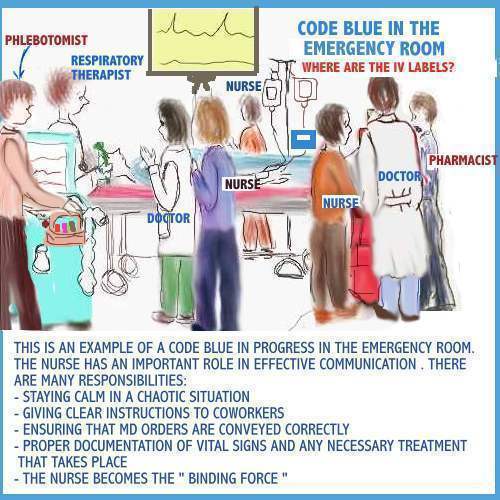
The image above shows a Code blue in progress. This is 
happening in the Emergency Room. Always follow your
Institution's policies and procedures for Code Blue. 

What is the role of the nurse who is assigned to the Code Blue?

The nurse has an important role in effective communication.
There are many responsibilities.
- staying calm in a chaotic situation
- giving clear instructions to coworkers
- ensuring that MD orders are conveyed correctly
- proper documentation of vital signs and all treatments /
  interventions that take place ( defibrillation for example)
  - the nurse becomes the " binding force

Addressing lethal rhythms

There are some EKG rhythms that are considered to be lethal.
Immediate intervention is necessary for good outcomes. Here are
the most lethal rhythms:

Asystole - sometimes referred to as " flat-line. The electrical
heart's conduction system is not functioning. There are no
ventricular contractions. The patient is pulseless and
unresponsive.

Ventricular Tachycardia - There may or may not be a pulse
present. The ventricles are beating rapidly and there is no atrial
activity. Blood flow to the vital organs is compromised.

Ventricular Fibrillation -  There is a chaotic rhythm and no
atrial activity. The ventricles are quivering , so there is no 
cardiac output. There is no pulse and the patient may become
unresponsive. Immediate action to defibrillate is usually done.


***American Heart Association has protocols in place for each
EKG rhythm.


Learn about : the ABG and Code Blue
Learn more about : The Circulatory System


Tuesday, March 08, 2022

ADDRESSING THE EKG / DVT/ CAT SCAN/ MRI

Updated 11/25

Learn more about :The EKG

Hemodynamics and its meaning

Hemodynamics refers to blood flow.
 The heart is a pump, which pumps blood around the body.
 If there is damage, like a myocardial infarction, the heart's
 function will be impaired.

Poor circulation may occur for a number of reasons.
The patient in heart failure, is at risk for stroke.

Myocardial infarction

 The heart is a pump, which pumps blood around the body.
 If there is damage, like a myocardial infarction, the heart's
 function will be impaired.

A MI (myocardial infarction ) is also known as a heart
attack. It results from obstruction to blood flow. Fatty
deposits may cause this. 

Death of the heart muscle surrounding the obstructed
blood vessel will result. Symptoms such as lack of oxygen,
shortness of breath and chest pain will occur.


Diabetic Retinopathy
 This condition affects the blood vessels in the eye.
 Poor vision and possible blindness may result from
 leaking and weakening of the blood vessels.


The consequences of poor circulation

The patient who has heart failure,
is also at risk for stroke or renal failure.
The diabetic patient is also at risk for stroke.

            
Aortic rupture may occur as a result of trauma.
Shortness of breath, chest or upper back pain
are some of the symptoms.

Cardiac Tamponade may be caused by penetrating 
trauma such as a knife wound. Pericardiocentesis
is usually done to remove the blood in the pericardial
sac. Learn more, by clicking on the link below:
 The Circulatory System


Friday, February 08, 2008

IDENTIFYING THE TREATMENT OF THIRD-DEGREE AV BLOCK

Updated 5/24
Dear nurses,

The EKG series is no longer available. Please use the
link :Third degree AV block
for more updated information.

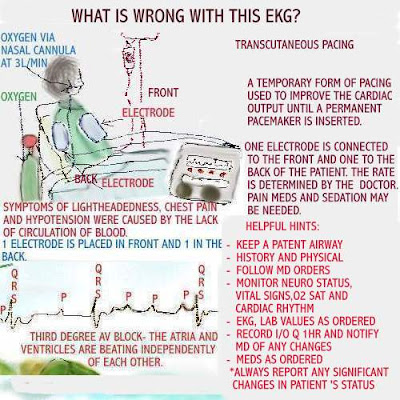
Transcutaneous pacing is a form of treatment
used to treat patients in Third degree AV block. 
This is considered to be an emergency type of 
treatment, when Atropine is ineffective.
 
  Transcutaneous pacing will help the heart to
beat and improve cardiac output until a permanent
pacemaker is inserted. Patients may need analgesia 
and sedation to keep comfortable, during this time.


The heart is always at work. Hemodynamics refers
to blood flow. Any obstruction to the flow of blood
in and around the heart, may lead to failure.

This is unacceptable!
A nurse should always try to seek guidance if unsure what to do.


Hemodynamics refers to blood flow. The heart is a pump,
which pumps blood around the body. If there is damage, 
like a myocardial infarction, the heart's function will be 
impaired. 
Learn more about: Congestive heart failure


Cardioversion is a form of shock treatment sometimes
 used for Atrial Fibrillation. It is used to change the heart
 rhythm from Atrial fibrillation to a normal rhythm( sinus rhythm). 
The shock is done on the R wave of the EKG. Typically, it is not
an emergency.

Defibrillation is a form of shock treatment used for
Ventricular fibrillation.This is a life threatening rhythm 
and the shock is done as an emergency.There is usually 
no pulse and the patient is unresponsive.

To learn more about this topic, simply click on the links below:


         Heart and lungs work together.


Friday, August 16, 2013

WHAT IS HEART TRANSPLANTATION?


Dearnurses.net is no longer available.

Updated 6/25
Dear nurses,


Scenario:
Tim was admitted to the ICU 
with extreme shortness of breath, fatigue 
and chest pain.

History includes CAD (coronary artery disease )
and two MIs. The doctor inserted a PAC
( Pulmonary ArteryCatheter ) in Tim's heart.

 He was also put on medications like:
- Dobutrex to improve cardiac output
- Nipride to increase vasodilation
Learn more about this topic by clicking
on the link: Organ transplation


Simple heart facts: The heart is a pump that pumps
 blood to all the organs around the body. Any damage
 to the heart muscle such as a myocardial infarction 
may cause lack of blood supply and oxygen deprivation.
 This results in chest pain and shortness of breath.

Hemodynamics refers to blood flow.
Learn more about; the EKG


Learn more about : Atrial fibrillation


Friday, April 06, 2007

WHAT IF IT IS VENTRICULAR TACHYCARDIA OR VENTRICULAR FIBRILLATION?

Updated 9/25
Dear nurses,

EKG Series is no longer available. 
New information has been added below.


Learn more about : Lethal Rhythms

The heart is always at work. Hemodynamics refers to blood flow.
Any obstruction to the flow of blood in and around the heart, may
lead to failure.
Learn more about : The Circulatory System

Wednesday, October 15, 2008

MYOCARDIAL INFARCTION - NURSING ASSESSMENT

Updated 12/25          Dearnurses.com is no longer available.

Dear nurses,
New topics and links have been added below.

The 12 lead EKG is done to analyze a myocardial
infarction's location. The electrical activity of the
heart is taken from 12 different angles, just like a
camera taking a picture from different views. 

Learn more about this topic by watching the video:

Scenario: Mrs. R is a 48 year-old female who has a history
of a previous myocardial infarction. She was admitted 2 days
 ago with mild chest pain. She was resting comfortably when
she suddenly started feeling short of breath. She is anxious 
and calls the nurse.

What actions did the nurse take?
The nurse reassures Mrs. R. She does an assessment, vital signs
, and oxygen saturation. She gives oxygen per protocol.

-The nurse notifies the doctor of what has occurred and her
assessment findings. She also mentions the vital signs, low
oxygen saturation, and steps that were taken to correct the
saturation. The doctor gives further orders, including a
transfer to CCU.


Why chest pain assessment?
It must be remembered that a patient with heart damage
 will also experience chest pain. Assessment of the pain
should also be included. This may be sharp, with radiation
 to the shoulder/jaw, or it may feel like chest pressure.

Helpful Hint:

Chest pain should always be assessed.
 Enjoy learning more about this topic by clicking on the link:
Simplifying Cardiogenic Shock

How do you read an EKG?
P wave = atrial contraction
QRS waves = ventricular contraction
T wave = resting time before the next contraction

 Learn more about this topic by watching the video:


Hemodynamics refers to blood flow. The heart is a pump,
which pumps blood around the body. If there is damage, 
like a myocardial infarction, the heart's function will be 
impaired. 
Learn more about: Congestive heart failure


A patient who has a straight line on the monitor,
requires immediate intervention. The nurse should
check the patient to make sure an electrode is not 
disconnected. 

If there is no disconnection, the patient may have 
gone into Cardiopulmonary arrest. This calls for 
CPR.

A Cardiopulmonary arrest is called a Code Blue.
This means the heart has 
stopped beating and the
body's cells are deprived of blood supply and 
oxygen.

Immediate action is taken by the staff , to call a Code
Blue overhead. This 
summons trained personnel to
that patient's bedside. 


Thursday, January 15, 2009

EKG SERIES- WHAT IS WRONG WITH THIS EKG

Updated 11/25

Dear nurses,
Dearnurses.com is no longer available.
New information has been added below.


Learn more about : Chest pain assessment

Helpful Hint:
Chest pain should always be assessed.
 Enjoy learning more about this topic by clicking on the link:
Simplifying Cardiogenic Shock


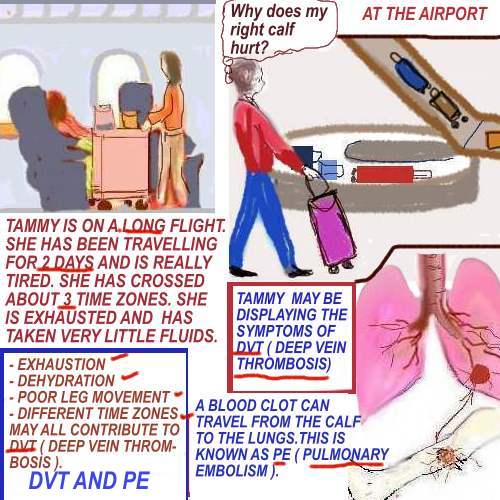
Learn more about : ARDS, DVT and PE


Hemodynamics refers to blood flow. The heart is a pump,
which pumps blood around the body. If there is damage, 
like a myocardial infarction, the heart's function will be 
impaired. 
Learn more about: Congestive heart failure


Learn more about : Abdominal Aortic Aneurysm