Dear Nurses

Friday, April 19, 2024

NEUMERICAL PAIN SCALE ASSESSMENT


Scenario: Paul had surgery on his back two days prior.
He is having pain and requests medication. The nurse
does an assessment.

Neumerical pain scale assessment

This a very useful tool when assessing pain. It is 
based on a scale of 0-10 ( 10 being the worst).
A ladder starts from the ground which is the
lowest point. It escalates to the highest point,
so does the pain. Pain scale:

0 = no pain
1-3 = mild pain
4-6 = pain is considered moderate
7-10 = pain is extreme or severe

Helpful hints:

Medication that is given by mouth, takes
longer to be absorbed than when it is given 
IM or IV.

It is important to do a pain assessment after
medication has been given. Documentation 
of the effect it has and any side effects, is 
also helpful. Learn more:
Safe medication administration


Learn more : The Nursing Process


Saturday, May 10, 2008

ADDRESSING PAIN ASSESSMENT

Updated 8/25

Dear nurses,

As we all know, pain is a common complaint.
It is important to recognize the cause, source
and to do an assessment on a scale of 1-10.

Pain medication is given to the patient complaining
of pain. Medication is usually ordered by the doctor.
The MAR is used for each patient.

Documentation of the pain medication given, the
pain scales from start to finish and the outcomes
of all medication, is also important.

Below are some scenarios associated with pain.


Learn more about: Aortic rupture


The nurse above is about to make a medication error.
This is very poor judgement on her part.
Here are some helpful pointers for good medication administration:
- Follow MD orders
- Remember the five or more rights
- DO NOT USE COLOR CODING AS YOUR ONLY GUIDELINE.
Remember, many pills may have the same color, but that does not
mean they are of equal strength.
- If you are a new nurse and you are uncertain, consult with a more
 experienced nurse to help you out.
- Always follow your Institution's policies and procedures.


The Numerical Pain Scale is a useful tool when
assessing pain. It is based on a scale of 0-10.
A ladder starts from the ground and escalates to
the highest point, so does pain start from 0-10.


Learn more about: Chest pain assessment and

Wednesday, February 22, 2023

AVOIDING MEDICATION ERRORS / NUMERICAL PAIN SCALE

Scenario: In the above image, a patient was brought into the 
 Emergency room with complaints of chest pain and a drop in 
 blood pressure. The doctor ordered Morphine for the pain and 
  Dopamine for the hypotension. Both medications were given
     as ordered. The nurse in the green top (left) gave the Morphine
and started the Dopamine infusion.

Next : What went wrong? The nurse forgot to put a label on the
 IV bag and did not document what time both medications were 
 given. It is very important for the nurse to pay close attention to
the time that medications are given. 


The Numerical Pain Scale is a useful tool when
assessing pain. It is based on a scale of 0-10.
A ladder starts from the ground and escalates to|
the highest point, so does pain start from 0-10.

It is important to do a pain assessment after pain
medication has been given. See image for more
information.


Learn more : The Nursing Process


Friday, September 02, 2022

POSSIBLE RISKS OF THE PATIENT CONFINED TO BED


Dear nurses,

Are you aware of the setbacks that may result from
the patient who is confined to bed for a prolonged
period of time?

Here are some of the problems that may result:
- Decubitus ulcers may develop and can be avoided.
Repositioning, good body alignment and soft
booties are ways to prevent this. The Braden scale
is used for predicting pressure sores.

- DVT ( Deep vein thrombosis) can be avoided by
encouraging leg exercises, using TED hose or the
SCD device on the patient confined to bed.

WHY TPN?
TPN ( Total Parenteral Nutrition) may be necessary
to provide adequate nutrition for the patient who is
unable to have foods orally.

Please click on the link below and watch the video
for more information:
New Nurse- Integumentary


The standards of care are an essential part of  the
Nursing profession. It provides guidelines within a
framework of practices.
Learn more about : The standards of care

Learn more about : Nursing communication


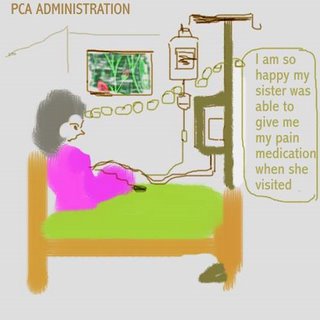
PCA ( Patient Controlled Analgesia)

Patient Controlled Analgesia may be ordered by
the doctor for the patient who is awake, alert and
able to self medicate. This method of administering
pain medication , is done via a pump, through the
intravenous route. Dosages are decided by the doctor.

However, patient and family teaching should be
included in the care plan. It is not uncommon for
family members to press the pain button for the
patient. Sessions 12 gives an overview of pain
assessment.

Indications for the use of the PCA pump include:
- patients who have surgical intervention
- patients with cancer or chronic pain issues
- conditions such as pancreatitis, sickle cell 
  anemia and more.


The Numerical Pain Scale is a useful tool when
assessing pain. It is based on a scale of 0-10.
A ladder starts from the ground and escalates to|
the highest point, so does pain start from 0-10.

It is important to do a pain assessment after pain
medication has been given. See image for more
information.


Friday, September 12, 2008

PAIN MANAGEMENT

Updated 6/25

Dear nurses, 

It is important to remember that pain assessment,
should not be overlooked. Always follow MD orders
for pain management.

Documentation of pain relief is also necessary.

Chest pain is a very common complaint. It may
occur anywhere and anytime, even at rest.
Learn more about : Chest pain

The Numerical Pain Scale is a useful tool when
assessing pain. It is based on a scale of 0-10.
A ladder starts from the ground and escalates to|
the highest point, so does pain start from 0-10.

It is important to do a pain assessment after pain
medication has been given. See image for more
information.


Tuesday, March 23, 2010

CLINICAL INFORMATION FOR NURSES

Updated 3/26

Dear nurses,

Dearnurses.net is no longer available. 
New information has been added below.


The care plan for each patient, is a reflection
of the information provided about the history 
and MD's diagnosis. Learn more: Care plan

Homan's sign - when dorsiflexion of the 
   foot is done by the examiner, the 
patient 
   will complain of calf pain, if there is a
   blood clot.


The standards of care are an essential part of  the
Nursing profession. It provides guidelines within a
framework of practices.
Learn more about : The standards of care

Learn more about : Nursing communication


PCA ( Patient Controlled Analgesia)

Patient Controlled Analgesia may be ordered by
the doctor for the patient who is awake, alert and
able to self medicate. This method of administering
pain medication , is done via a pump, through the
intravenous route. Dosages are decided by the doctor.

However, patient and family teaching should be
included in the care plan. It is not uncommon for
family members to press the pain button for the
patient. Sessions 12 gives an overview of pain
assessment.

Indications for the use of the PCA pump include:
- patients who have surgical intervention
- patients with cancer or chronic pain issues
- conditions such as pancreatitis, sickle cell 
  anemia and more.


The Numerical Pain Scale is a useful tool when
assessing pain. It is based on a scale of 0-10.
A ladder starts from the ground and escalates to|
the highest point, so does pain start from 0-10.

It is important to do a pain assessment after pain
medication has been given. See image for more
information.


Friday, January 08, 2010

DISPOSAL OF USED NEEDLES AND SYRINGES

Updated 3/26

Enjoy watching the video: Safe medication administration


The standards of care are an essential part of  the
Nursing profession. It provides guidelines within a
framework of practices.
Learn more about : The standards of care

Learn more about : Nursing communication


PCA ( Patient Controlled Analgesia)

Patient Controlled Analgesia may be ordered by
the doctor for the patient who is awake, alert and
able to self medicate. This method of administering
pain medication , is done via a pump, through the
intravenous route. Dosages are decided by the doctor.

However, patient and family teaching should be
included in the care plan. It is not uncommon for
family members to press the pain button for the
patient. Sessions 12 gives an overview of pain
assessment.

Indications for the use of the PCA pump include:
- patients who have surgical intervention
- patients with cancer or chronic pain issues
- conditions such as pancreatitis, sickle cell 
  anemia and more.


The Numerical Pain Scale is a useful tool when
assessing pain. It is based on a scale of 0-10.
A ladder starts from the ground and escalates to|
the highest point, so does pain start from 0-10.

It is important to do a pain assessment after pain
medication has been given. See image for more
information.


Wednesday, August 20, 2008

PCA ADMINISTRATION

 Updated 12/25

PCA ( Patient Controlled Analgesia)

Patient Controlled Analgesia may be ordered by
the doctor for the patient who is awake, alert and
able to self medicate. This method of administering
pain medication , is done via a pump, through the
intravenous route. Dosages are decided by the doctor.

However, patient and family teaching should be
included in the care plan. It is not uncommon for
family members to press the pain button for the
patient. Sessions 12 gives an overview of pain
assessment.

Indications for the use of the PCA pump include:
- patients who have surgical intervention
- patients with cancer or chronic pain issues
- conditions such as pancreatitis, sickle cell 
  anemia and more.


The Numerical Pain Scale is a useful tool when
assessing pain. It is based on a scale of 0-10.
A ladder starts from the ground and escalates to|
the highest point, so does pain start from 0-10.

It is important to do a pain assessment after pain
medication has been given. See image for more
information.


Wednesday, November 02, 2016

MEDICAL TERMINOLOGY IN THE CLINICAL SETTING - PART 1

Dear nurses,

Hope your week is going well. I wanted to
share with you a new video Sessions 62-
Medical terminology in the Clinical Setting.
 Topics include:
- DKA ( Diabetic Ketoacidosis )
- Hypothermia in the postoperative patient
- Malignant Hyperthermia its causes and treatment
So, just click on the link:
Medical terminology in the Clinical setting
and enjoy learning!


Learn more about : PACU

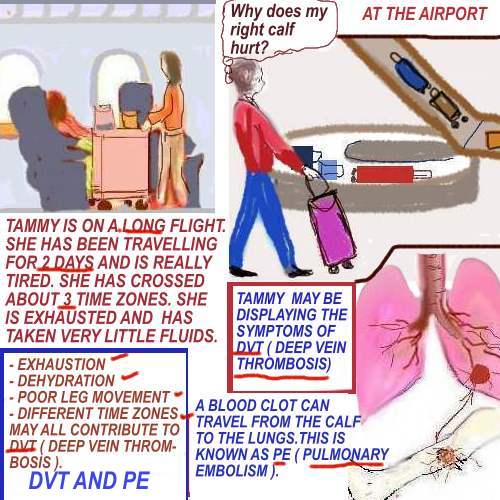
Most people who anticipate taking a long plane
 flight, may hardly stop to think about dehydration
 and its consequences. 
Learn more about : ARDS, DVT and PE


Learn more about : The Endocrine System


The standards of care are an essential part of  the
Nursing profession. It provides guidelines within a
framework of practices.
Learn more about : The standards of care

Learn more about : Nursing communication


PCA ( Patient Controlled Analgesia)

Patient Controlled Analgesia may be ordered by
the doctor for the patient who is awake, alert and
able to self medicate. This method of administering
pain medication , is done via a pump, through the
intravenous route. Dosages are decided by the doctor.

However, patient and family teaching should be
included in the care plan. It is not uncommon for
family members to press the pain button for the
patient. Sessions 12 gives an overview of pain
assessment.

Indications for the use of the PCA pump include:
- patients who have surgical intervention
- patients with cancer or chronic pain issues
- conditions such as pancreatitis, sickle cell 
  anemia and more.


The Numerical Pain Scale is a useful tool when
assessing pain. It is based on a scale of 0-10.
A ladder starts from the ground and escalates to|
the highest point, so does pain start from 0-10.

It is important to do a pain assessment after pain
medication has been given. See image for more
information.


Saturday, October 06, 2007

MALIGNANT HYPERTHERMIA

Malignant Hyperthermia


Malignant Hyperthermia  is characterized by a rapid rise in temperature, tachycardia, 
hypertension and increased muscle contractions.

This condition, though rare,requires quick action in order to terminate the inhaled gas.
Cooling measures with ice, will help minimize damage to the bodyDantrolene IV is
known as the only effective drug.

Updated 10/24
The Clinical Setting Step by Step is no longer available.
Please click on the links :

and enjoy learning.


The standards of care are an essential part of  the
Nursing profession. It provides guidelines within a
framework of practices.
Learn more about : The standards of care

Learn more about : Nursing communication


PCA ( Patient Controlled Analgesia)

Patient Controlled Analgesia may be ordered by
the doctor for the patient who is awake, alert and
able to self medicate. This method of administering
pain medication , is done via a pump, through the
intravenous route. Dosages are decided by the doctor.

However, patient and family teaching should be
included in the care plan. It is not uncommon for
family members to press the pain button for the
patient. Sessions 12 gives an overview of pain
assessment.

Indications for the use of the PCA pump include:
- patients who have surgical intervention
- patients with cancer or chronic pain issues
- conditions such as pancreatitis, sickle cell 
  anemia and more.


The Numerical Pain Scale is a useful tool when
assessing pain. It is based on a scale of 0-10.
A ladder starts from the ground and escalates to|
the highest point, so does pain start from 0-10.

It is important to do a pain assessment after pain
medication has been given. See image for more
information.